
LATEST COMMENTARY
FIVE THINGS TO KNOW
MCT READER PULSE · MCT-PULSE-2026-017
MCT READER SURVEY
Gaano ka nagtitiwala na tama ang ginagawa ng Kongreso sa budget ng bayan?
This is an informal survey of people who choose to participate. It is not a scientific or nationally representative sample.
ABOUT THE RICE SHIPMENT DISPUTE AND THE RECORDS WE STILL NEED TO SEE
Agriculture Secretary Francisco Tiu Laurel Jr. says his department stopped a disputed rice shipment. A farmers' group is asking him to step aside while the importation is investigated. Customs has described enforcement action against the cargo.
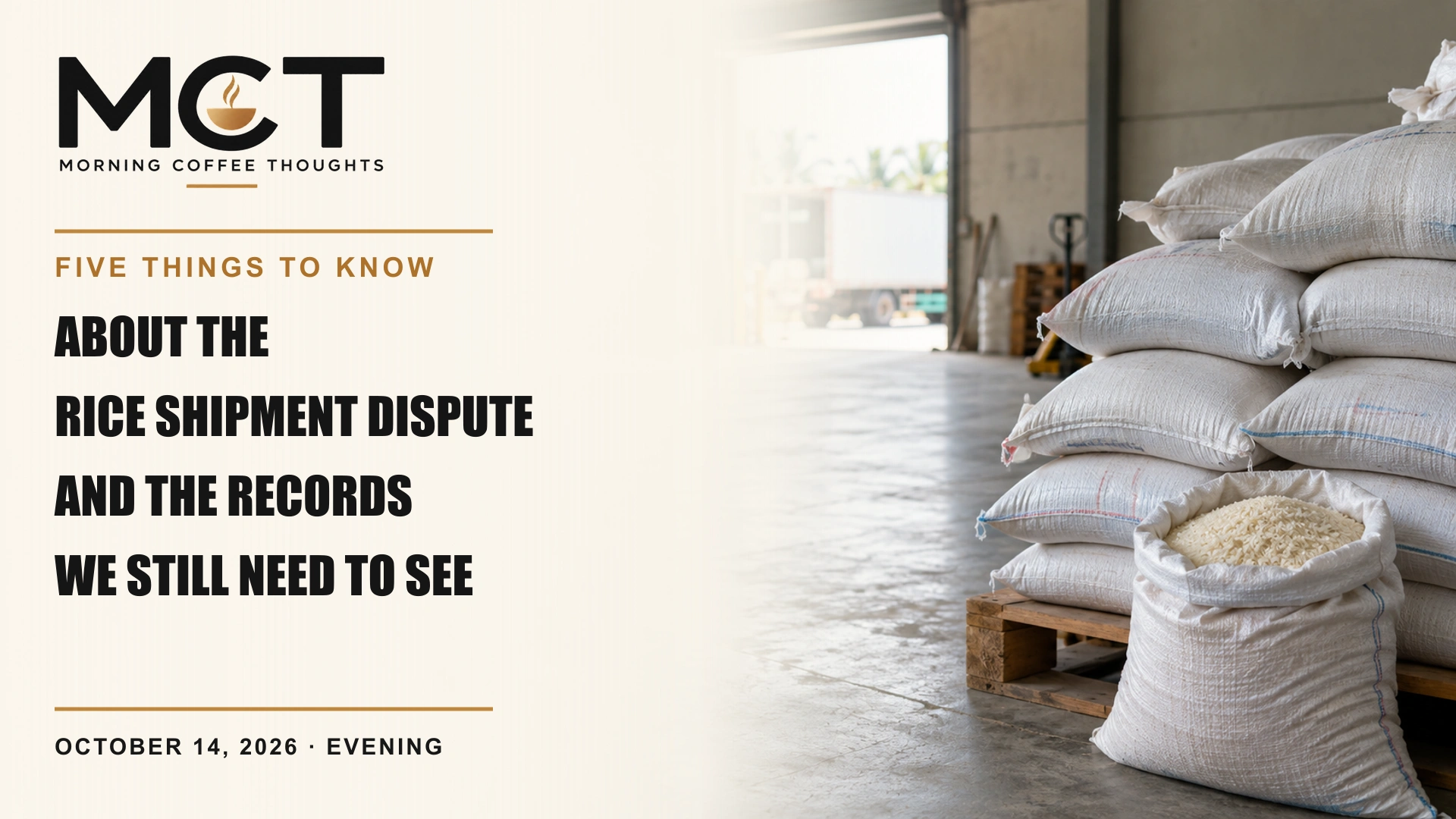
For readers trying to follow the story, there are several questions: what the shipment was allowed to carry, when its clearance was cancelled, who knew about that cancellation, and who should examine the decisions made along the way.
Here are five things to know before accepting either a claim of wrongdoing or an assurance that everything was handled properly.
Reporting cutoff: October 14, 2026, 5:30 PM Philippine time.
1
TWO SHIPS APPEAR IN THE REPORTS. THE DA'S LATEST EXPLANATION CONCERNS ONE.
The Bureau of Customs reported on October 13 that authorities intercepted MV Tay Son 2 and MV Lucky Star, carrying roughly 20,000 metric tons of rice from Vietnam between them. It cited questionable documents and cancelled sanitary and phytosanitary permits. These are import clearances covering plant-health safeguards. [BOC's account of the interceptions](https://customs.gov.ph/boc-da-at-navy-kinilala-ni-sen-kiko-dahil-sa-matagumpay-na-paghuli-ng-%E2%82%B1700m-na-bigas/)
The Department of Agriculture's October 14 explanation focuses on Tay Son 2. Readers should avoid assigning everything reported about that vessel to Lucky Star as well. They are separate shipments, with records that have to be checked separately.
Even the Tay Son 2 quantities need care. DA describes a 12,480-metric-ton import application; Customs lists 12,500 metric tons for the vessel. The available statements do not explain that difference. We should not quietly choose one number and call it the final inspected weight.
WHAT TO WATCH
A cargo inventory and the clearance records for each ship, with any differences between approved, declared and inspected quantities explained.
2
THE DA SAYS IT CANCELLED THE CLEARANCE BEFORE ARRIVAL.
Tiu Laurel says the DA ordered cancellation before Tay Son 2 arrived. According to the department, importer PPI also sought cancellation because the rice differed from what it ordered and the delivery contract had expired. Arrival was intended for July; the vessel reached Davao on September 14, the DA says. [DA's October 14 statement](https://www.da.gov.ph/da-ordered-bpi-to-cancel-permit-for-controversial-rice-import/)
That is the secretary's explanation. We have not seen the underlying cancellation order, contract or notices. A dated order would show when the decision was made. Proof that the importer, ship and port received it would help show who knew what before arrival and departure.
Those documents could support the DA's account or expose a gap in it. The agency's statement alone cannot settle every question about how the shipment was handled.
WHAT TO WATCH
The cancellation order, its stated grounds and the dates when the relevant parties received notice.
3
FARMERS ARE ALSO ASKING WHO CAN INVESTIGATE WITHOUT A CONFLICT.
The Federation of Free Farmers has called for Tiu Laurel and BPI director Glenn Panganiban to take leave during the investigation, Bilyonaryo reports. The group points to Tiu Laurel's reported chairmanship of Planters Foundation Inc., which it says holds a controlling stake in importer Planters Products Inc. [Bilyonaryo's account of the FFF call](https://bilyonaryo.com/magleave-muna-sec-farmers-urge-tiu-laurel-to-step-aside-amid-p395m-rice-import-probe/)
The concern is whether an official overseeing rice-import regulation also has a role connected to the importer being examined. We have not independently checked the current corporate filings. The group's account must remain attributed, and a connection by itself would not prove an illegal shipment or personal interference.
Tiu Laurel rejects suggestions of malice or corruption and says his office stopped the cargo. An investigation should test that explanation while making clear who is reviewing decisions involving his own department.
WHAT TO WATCH
Current corporate records, a direct answer about the reported roles, and who will lead the investigation. A request to take leave is not a finding of guilt.
4
HOLDING THE CARGO DOES NOT SETTLE EVERY LEGAL QUESTION.
Abante reported on October 12 that Customs had issued a warrant of seizure and detention against Tay Son 2 and its cargo. It also reported an alleged refusal by the captain to open the holds for a September 29 inspection. These are accounts of Customs' allegations and actions, rather than a judgment against every person involved. [Abante's report on the Customs action](https://www.abante.com.ph/2026/10/12/boc-kinumpiska-p395m-bigas-mula-vietnam/)
DA says BPI has recommended returning the rice to its country of origin and is awaiting Customs' action. The reports use different descriptions of the cargo's status. A detention or seizure order and a later decision about where the rice goes are different steps; the full Customs orders would help establish exactly which steps have been completed.
The Philippine Star also reports Senator Francis Pangilinan's view that an initial investigation points to a possible violation of the Anti-Agricultural Economic Sabotage Act. Possible liability still has to be tested against the facts and the law. [The Philippine Star's report](https://www.philstar.com/headlines/2026/10/14/2563121/boc-chief-vows-no-let-drive-vs-agricultural-smuggling)
WHAT TO WATCH
The inspection findings, the applicable Customs orders, and any complaint or ruling naming specific acts and people. Avoid using detention as shorthand for a criminal conviction.
5
FARMERS AND BUYERS NEED AN ANSWER THAT GOES BEYOND A SEIZED SHIP.
DA argues that the delayed shipment could have put pressure on palay prices as the wet-season harvest approached. That describes a risk; it does not show how much this particular shipment changed any farmer's selling price.
For farmers, the useful evidence includes actual farmgate prices and the timing of deliveries. For households, it includes what rice costs in stores. Neither group benefits from a public argument that leaves the cargo records, costs and final decision unexplained.
There are practical questions while the rice is held, too. Who is responsible for its condition? What costs are accumulating? If it is returned or otherwise dealt with, what written order supports that action? These are questions for the agencies and parties involved, not claims that we already know the answers.
WHAT TO WATCH
A written decision on the cargo, an explanation of its custody and condition, and price data that can test claims about the shipment's effect on farmers and consumers.
BOTTOM LINE
The public should be able to follow this shipment through its paperwork: the original clearance, the cancellation, the notices, the inspections and the final Customs decision. The reported ties between the regulator and importer deserve a clear answer as well.
Until those records can be checked, we can report what officials and farmers' groups are saying, identify the gaps and keep asking for answers. We should not fill those gaps with either a conviction or a clean bill of conduct.
GOOGLE PREFERRED SOURCES
FOLLOW MCT ON GOOGLE
Google’s Preferred Sources feature lets you choose publications you want Google to prioritize for you. Select “Add to Preferred Sources” to make MCT easier to find in Top Stories and other eligible Google results. This does not subscribe you to email.
SUPPORT MCT
HELP KEEP INDEPENDENT POLITICAL WRITING GOING.
Morning Coffee Thoughts is reader-supported. Contributions help pay for research tools, hosting, and the work required to verify and explain each development.